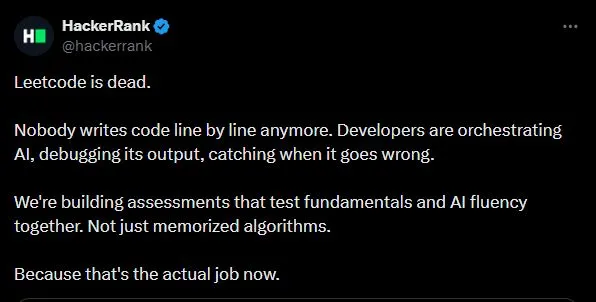
AI can one-shot any LeetCode problem you’ve spent three hours staring at. That same AI can help you build and ship an entire product in a weekend. One path ends with a slightly higher interview score. The other might end with revenue, users, and a career trajectory you never planned for.
Most people are still grinding. The smart ones are building.
LeetCode was always a scaling hack
Google gets 3 million applications a year. They needed a cheap, repeatable filter. LeetCode-style interviews were the answer - not because they identify talent, but because they process volume. One rubric, thousands of interviewers, millions of candidates. Assembly line hiring.
You memorize patterns. Grind 500 problems. Pray the interviewer picks a variation you’ve seen. Get the job. Never touch a linked list reversal again.
Lazy hiring dressed up as meritocracy. And now AI exposed it completely. Claude solves medium problems in seconds. Hard problems in a minute. The thing you spent six months grinding costs less than your Netflix subscription.
Their solution to AI cheating? Fly candidates across the country to scribble on whiteboards in person. Not rethinking what they test - just making the broken test harder to cheat on. Peak big tech logic.
If your entire hiring signal can be replicated by AI in 30 seconds, that signal was never measuring what you thought it was.
”But LeetCode gets you hired”
Does it? You grind for 6 months. Apply to 200 companies. Get maybe 10 interviews. Bomb 6 because the interviewer picked outside your memorized set. Pass 4, get ghosted on 2. Land one offer.
Six months for an outcome with 47 variables you can’t control: market conditions, headcount freezes, hiring manager vibes, visa policies, team budget cuts mid-loop.
LeetCode was never the bottleneck. The market is. Your network is. Luck is. You just convinced yourself the one variable you could control was the one that mattered most. It wasn’t.
Side projects: same downside, unlimited upside
Both LeetCode and side projects can lead nowhere. But the best-case scenarios aren’t in the same universe.
LeetCode best case: Job at a company that values algorithm trivia.
Side project best case: Pick any:
- Something people use that generates revenue
- You learn a new stack by building with it, not reading docs
- Goes viral on Hacker News, DMs explode with opportunities
- A hiring manager sees your GitHub and skips the technical screen
- You accidentally build a business
LeetCode has a hard ceiling. Side projects have none.
AI turned solo builders into small armies
Two years ago, a real product meant months of boilerplate, fighting frameworks, and shipping half-baked because you ran out of energy. You needed backend, frontend, design, DevOps. A team effort.
Now? Landing page in an hour. REST API with auth in an afternoon. Pivot your entire frontend over a weekend. Try five ideas in the time it used to take to validate one.
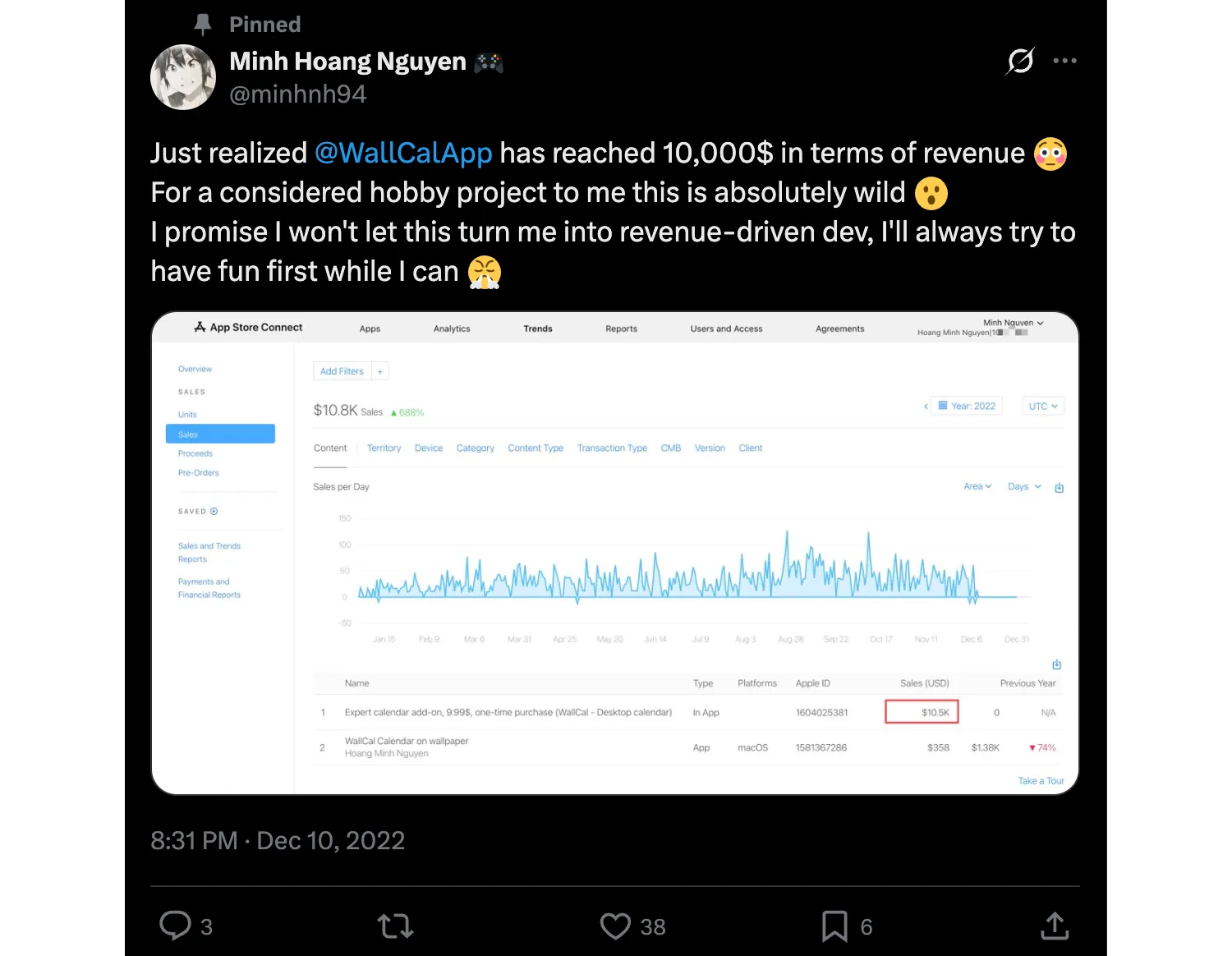
Solo developers are shipping real SaaS products that make real money. Not because they got smarter, but because AI collapsed building costs from “team and six months” to “one person and a few weekends.”
And instead of using this superpower to create things, people are using AI to solve LeetCode problems faster. The irony is painful.
You actually learn when you build
LeetCode teaches you almost nothing about software engineering. Building teaches you everything that matters: system design, trade-offs, production debugging, shipping imperfect things and iterating, dealing with real databases and real users who do insane things.
These are the skills that make you senior. You can’t get any of them from reversing a binary tree.
Companies are catching on. System design interviews are eating the technical interview space because they’d rather hire someone who’s built and shipped than someone who memorized the top 100 patterns.
The enjoyment factor
Grinding LeetCode sucks. It’s repetitive, soul-crushing, and the dopamine from solving a hard problem evaporates when you realize there are 2,000 more.
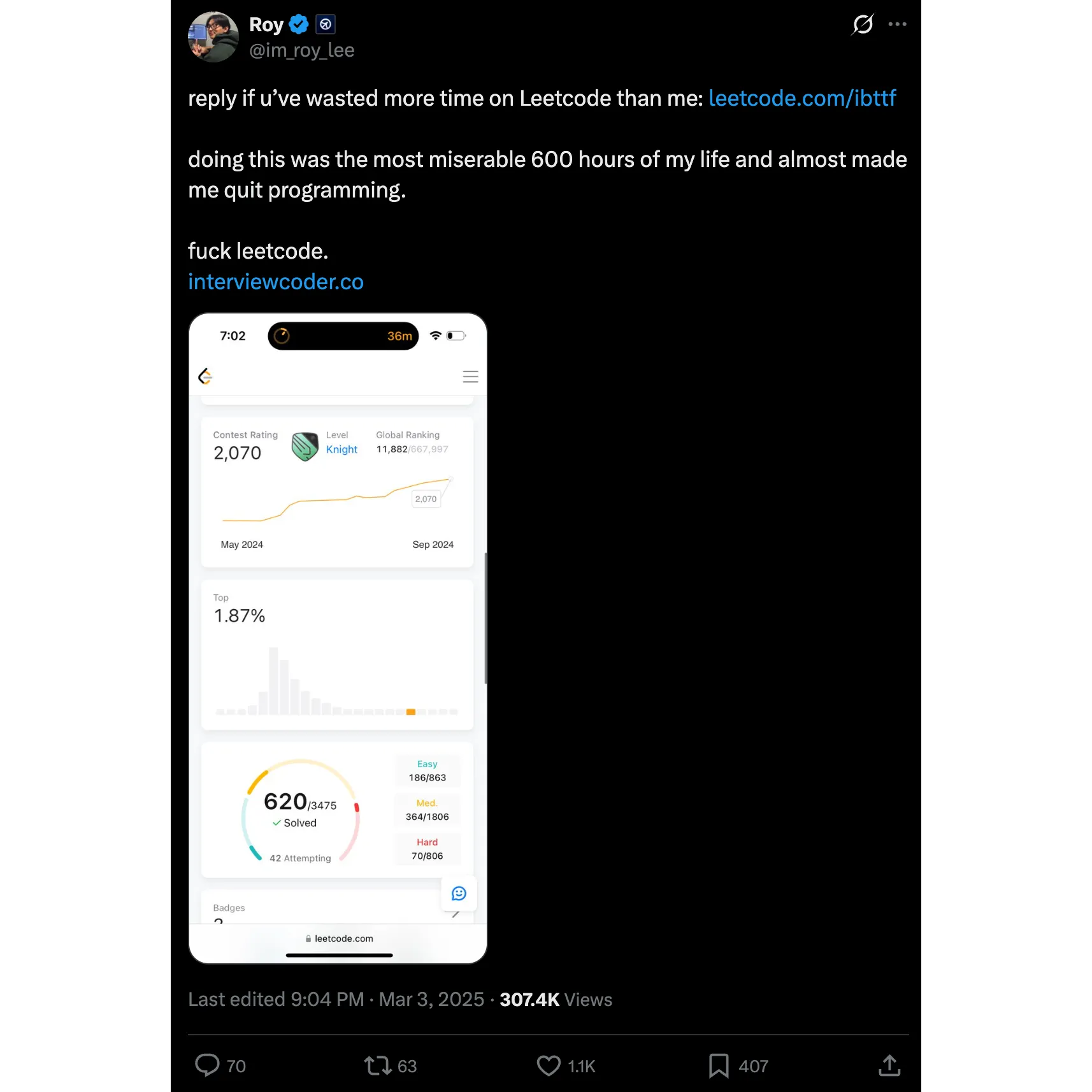
Building something you care about? You wake up excited. Think about the architecture in the shower. Stay up late because you’re in flow, not because you have to. Show it to friends who actually use it.
Sustained motivation beats forced discipline every time. Six months building something you love produces more learning than white-knuckling through 500 problems you hate.
What to do right now
Close the LeetCode tab. Pick a problem that annoys you personally. Build the thing that fixes it. Ship it ugly. Put it on GitHub. Iterate when users complain.
If you still need to pass interviews, spend 10% of prep time on algorithms. Use AI to learn patterns quickly. Spend the other 90% building. When you walk in with a project you’re passionate about - one you can discuss the architecture, trade-offs, and scaling challenges of - you’re not “candidate #347 who can implement BFS.” You’re “the person who built that thing.”
LeetCode was a means to an end, and the end was always “prove you can build shit.” Skip the middleman. Just build the shit.